 Read the Voice
Speech to text without a subscription: how the minutes work
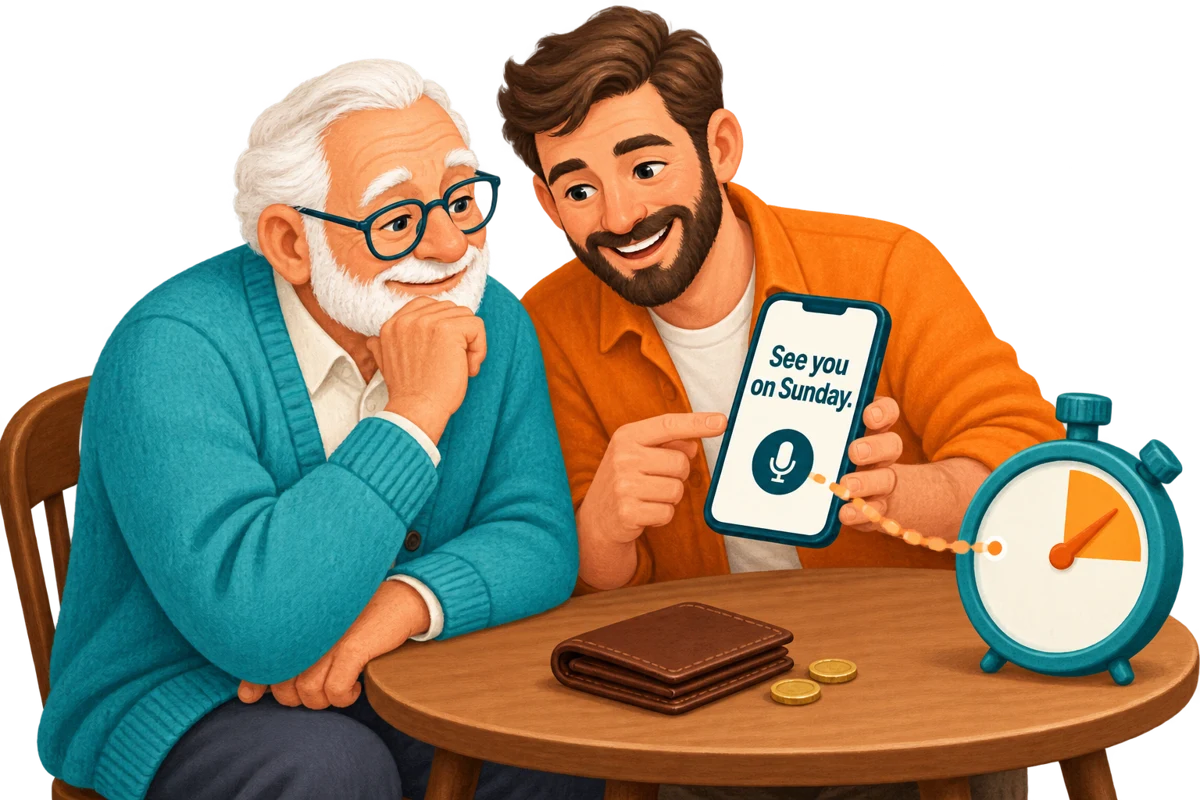
Some families want speech to text for a weekly visit. Others use it for short conversations throughout the day. Read the Voice uses a balance of recording minutes rather than a recurring subscription.
Eligible Apple-linked accounts start with 20 introductory minutes. Additional time is available through in-app purchases. The app shows your balance on the main screen, and the purchase screen shows the current price for your App Store region.
$1.99 per hour of transcription
The simple price reference is $1.99 USD for an hour of transcription, with no subscription. This is the US price of the 60-minute pack; check the purchase screen for the exact price in your App Store region. Larger packs include bonus minutes, so their effective hourly price can be lower.
An hour means 60 minutes of recorded audio in total. It does not mean an hour with the app open, and a family visit can include plenty of time when nobody is recording.
What uses a minute?
The time you record is the time that counts. Hold the microphone button while speaking and release it when you finish. Silence during the recording also uses time.
For example, a recording lasting 15 seconds uses 15 seconds of your balance, even if part of that recording was a pause. Waiting for the transcription to be processed does not add to the recording duration.
This makes it useful to release the button once you have finished a sentence, rather than holding it while waiting for someone to answer.
What happens in Tandem?
The receiving device’s account supplies the minutes. If three relatives speak from their phones to one iPad, their recordings use the iPad account’s balance. They do not each need to buy a separate pack.
Learn how to connect a family to one shared iPad. Connecting a device is not the same as making a recording, and sharing the resulting text does not multiply the recorded time by the number of screens.
Which packs are available?
The current product offers 60, 330 and 720 minutes. The larger packs include bonus minutes in those totals: 300 plus 30, or 600 plus 120. Check the app for current local prices before purchasing.
You can review usage in the app. If a balance change is unexpected, check the signed-in account and usage history before buying another pack.
Is a minute-based app the right fit?
A balance can be convenient when you want occasional, deliberate recordings without a recurring plan. If you need continuous captions throughout the day, compare that workflow with services designed for ongoing captioning. Read the Voice transcribes after you release the button; it is not an unlimited live-caption service.
Begin with an ordinary conversation: use the introductory allowance, look at how much recording time you used, and decide whether the workflow suits your family.
Try 20 minutes before buying more
Read the Voice includes 20 introductory minutes for eligible Apple-linked accounts, not unlimited free transcription. After those minutes, further use requires available purchased time. If you need ongoing use without buying minutes, compare other options and their limits before choosing. A free trial and a permanently free service are different offers.
A simple example of a family visit
Imagine a visit with twelve recordings of 30 seconds each. That is six minutes of recorded audio, even if the visit lasts an hour. At the US 60-minute pack’s rate, that uses about $0.20 worth of purchased time. This is an illustration of the calculation, not a promise about how much your family will use.
If three guests each record two minutes through Tandem, the receiving account uses six minutes in total. The number of connected phones does not create a separate subscription or fee for each guest.
Before you top up
Check the main-screen balance and usage history, then choose a pack in the app. Apple presents the local purchase price before confirmation. Use the free introductory time to try the actual recording and reading rhythm with your relative, rather than judging it only from a demonstration.